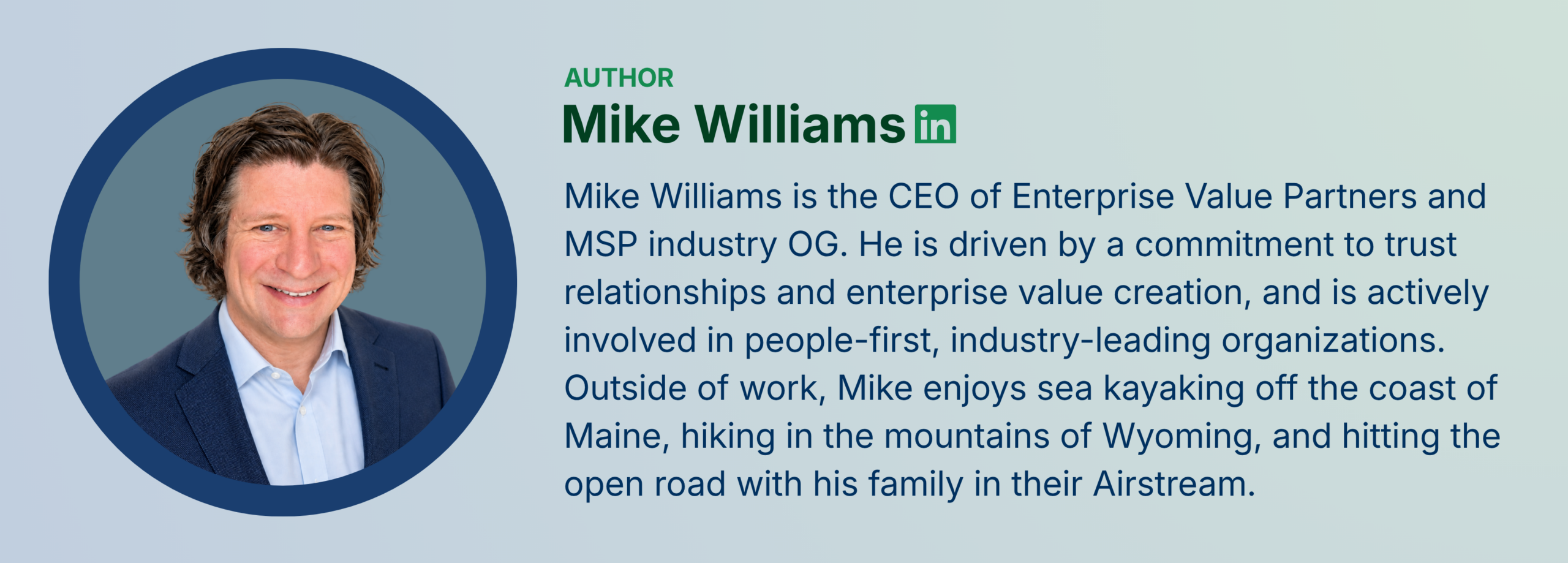
After 15 years as a member of a peer group, I recently stepped into the facilitator chair for the first time. Standing in front of a room full of leaders running great companies, sharing what I’ve learned and listening to what they had to teach me, was one of the most satisfying experiences of my career. It reminded me why peer groups have shaped so much of how I think about leadership, and why I believe every owner-founder should be in one.
Every Room Teaches Me Something
Even though I’ve been doing this work since the 1990s, I walk into every peer group session expecting to learn. That expectation has never let me down. Every company in the room no matter its size, stage, or industry niche, has something to contribute. The exchange is constant and reciprocal: I share what I’ve seen, they share what they’re seeing, and all of us walk out a little sharper than when we came in.
That dynamic is what makes peer groups so different from a consultant engagement or a conference panel. There’s no expert at the front of the room dispensing wisdom while everyone else takes notes. Everyone in the room is the expert in their own business, and everyone in the room is a student of the others.
My Superpower Is Sharing My Failures
I tease the group sometimes that my superpower is being painfully transparent about how badly things can go wrong when I was sure they were going to succeed. There’s no shortage of leadership content out there about wins. Wins are easy to talk about. What’s harder, and far more useful, is walking other operators through the deals, hires, and bets I was certain would land that ended up sideways. If sharing my own pitfalls helps someone else avoid them, that’s a win in my book.
That kind of transparency only works if everyone in the room buys into it. The best peer groups I’ve been part of move quickly past storytelling and image management and into what’s breaking. What did you expect to happen? What’s happening instead? Where are you stuck? Those are the conversations that change companies, and as members we have a responsibility to each other not to let anyone slide into a polished version of their own quarter. We hold each other to a real answer, even when the conversation is difficult because our goal is making each other’s companies better.
We’re Each Other’s Board of Directors
That’s really the concept behind the peer group format. As owner-founders, most of us don’t report to anyone. There’s no built-in mechanism that forces accountability the way a board would. A good peer group fills that gap. The members are each other’s board of directors. We ask the uncomfortable questions, push back on the easy answers, and make sure no one in the room is comfortable for the wrong reasons.
The Empire Builder Story
The group I belong to is now one of four Empire Builder groups. Back in 2015, the original version was called HTG 50, it was built for larger companies. At one point there were only two members in that room, and we were one of the two. Today there are four full Empire Builder groups and they keep growing. Watching that explosive growth has been one of the most exciting parts of being in this network. The expansion, the consolidation in the industry, and the caliber of operators showing up to do real work together, has been incredibly fulfilling to be part of.
The Question Every Operator Keeps Asking
You hear different things from every member, but one challenge comes up across every group, every platform, and every service provider I’ve worked with: organic growth and new logos. Once a company hits a certain size, sustaining the growth engine — lead generation, pipeline, closing sales — becomes the single hardest thing on the leadership team’s plate. It’s a universal problem, and it’s one peer groups are uniquely good at helping with, because someone in the room has almost always solved a component of it before. The same is true across the full spectrum of issues we tackle, from working with private equity partners and investors (for those that are PE-backed) to running day-to-day operations; they tend to be common problems with common, hard-won answers.
The Quiet Challenge: Post-Acquisition Integration
A close second to organic growth, and an issue I hear about frequently inside the Empire Builder room, is post-acquisition integration. The pattern is familiar. A founder spends years building a strong, profitable company. A private equity partner comes in, and suddenly the playbook calls for rapid growth through M&A. The company is expected to source deals, close them, and absorb them on a cadence it has never operated at before without ruining culture. And the team that built the original business — the one that earned the investment in the first place — is rarely a team that has done many deals.
What I’ve seen, in my own companies and in the rooms I sit in, is that the work that determines whether an acquisition creates value almost always happens before and after the close, not at close itself. Integration planning that starts at signing is already late. The first 90 days set the cultural tone for the next 18 months. Sequencing (which systems, which people, which customers, in which order) tends to matter more than speed. And the real risks usually aren’t the ones on the synergy slide; they’re the quiet operational ones that don’t show up until a quarter or two in.
The good news is that none of this is mysterious. It’s a learnable muscle, and most of the leaders I’ve sat with build it faster than they expected to once they see it laid out. A peer group is a great place to start, because someone in the room has almost always lived through the specific question you’re asking. And if it ever helps to go deeper on the integration side specifically, that’s the work Enterprise Value Partners does — but mostly I just hope sharing what I’ve learned saves another operator a few of the bruises I picked up the hard way.
Contact us for a free consultation.